



















On Wednesday September 18th, I will be interviewed by Karen Tate on her radio show "Voices of the Sacred Feminine". I am honored to be invited to speak on her show about the research I've done to write the historical novel about Mary Magdalene and her life; "Rituals in Sacred Stone".
These are the talking points I plan to discuss with her.
1) Religion today is totally different from religion in the time of Jesus and Mary Magdalene. We consider sitting in a church on Sunday being religious, whereas in their time they lived their religion. It was alive in the legends of the Gods enacted at the festivals honoring the year. It was understood as a relationship of abilities and forces inside every person developing as they evolved in their own lives.
2) Yeshua and Mariam lived at the tipping point of a paradigm shift, just like we do today. She represented the Goddess religions of Egypt and Mesopotamia, where the old mystery schools functioned. He represented the new idea of LOVE being the new focus of religious understanding. Together they faced the old patriarchy of the Jewish traditions and of Rome.
3) Unfortunately, the Roman Empire adopted the Christian movement, adapted it to fit over the existing Mithras religion, and organized it into a Holy Roman Empire, complete with an army, vast landmasses and the same rights as kings. Religion was used to keep the people they conquered at a low developmental level, creating good sheep, to enable them to collect wealth and power. They quite effectively taught shame and guilt instead of enlightenment, and have continued to do so for two thousand years.
4) Mariam was most likely betrothed to Yeshua from birth. They represent two different tribes of the Jewish people. She, from the Benjamin tribe, him from Joseph. The Benjamin tribe had responsibility for the land the Temple stood on, and the physical temple. His tribe was responsible for the functions in the temple. Together they represented the return of the original Jewish people to claim the temple in Jerusalem. The temple had just been rebuilt by Herod the Great, but the rabbis were friendly with the Romans. A change was needed to bring it back to it's old knowledge and glory.
5) Yeshua and Mariam were well educated. She was a priestess of the old mystery schools, he was trained in the ancient temple traditions, from before the first destruction by Babylonia in about 800 BC. A secret temple existed in the desert north of Heliopolis where they kept the old knowledge. These two were not "priest and priestess" they way we think of today. They were spiritual technicians who knew how to work with unseen forces. They were experts on the laws of physics that governs the spiritual worlds. They used them and they taught them. As for her being accused of being a prostitute; let's expand the story. She comes from a tradition where the sexual act is seen as a fertility rite done in public at the solstices. Seen from a patriarchal society, everything she represents then becomes improper, immoral, disgusting and barbaric. It is very likely people like Peter, a staunch traditionalist, would give her that epitaph without understanding the profound meaning behind her culture.
6) In the Biblical text, Mary Magdalene shows up whenever there is need for a ritual. She washes his feet, she anoints his head, and she follow him through his passion and shows up at Gethsemane Garden as he awakens. Or as in my story; she stayed with him in the tomb administering to him, bringing him back from his journey. She must have been a priestess and his wife. Only a wife was allowed to handle her husbands dead body, and only a priestess could perform the rituals.
7) Much points to that they were giving initiations to their inner circle of disciples. The story of Lazarus is similar to an Egyptian tradition, an initiation called The Journey of Osiris. Administered by trained priests and priestesses, the initiate would be given anointments and herbs and placed in a safe solitary place and then leave the body, appear dead, be gone for three days and then return to their body. Shakespeare described this as Juliet's experience. In the Bible, Lazarus is sent on a similar journey. The passion of Christ seems to follow the same pattern, but including the treatment of the Romans. The question then becomes; did they plan for that outcome? Did they know what the Romans would do to a rebel, and planned their own pageantry around it? It would fit very well in the mythology of their time. There were numerous stories of the sacrificed king, giving his life for the good of his people. These stories were played in front of people at the festivals. Yeshua living it for real made him even more believable.
8) Seen from the Roman's side, the only thing worse than a hero is a dead hero, and this one didn't even die properly, but resurrected himself. This was a total blow to the Roman authority. They were made into fools in front of the unruly people of Jerusalem, who didn't behave at all like other people they had taken over and absorbed. The people of Judea rebelled. In 70AD, shortly after the story of Christ, Jerusalem was destroyed. The famous temple was leveled and people massacred. Another diaspora occurred. The Judaic people were again spread all over the world.
9) Mary Magdalene, Jesus and their families had to escape immediately after the crucifixion. Their lives were in danger. The Romans didn't want any offspring from this famous rebel, and the rabbis weren't too happy with them either since they disturbed the working relationship they had with the Roman authorities. There are legends of Jesus in India and of Mary Magdalene in France. We know of the travel routes of Joseph of Aramathea between Jerusalem and Cornwall, England, passing through the Languedoc area of France. There are also legends in England about the early church, the first altar made by Jesus and his father, the first church built by Joseph of Arimathea and the stories of the hides of land in Glastonbury given as a gift to the family by king Arviragus. They were recognized as royal and treated accordingly.
10) The body of knowledge taught by Mary Magdalene in France was perpetuated by the Cathars and the Merovingian kings. In England, it became the Celtic church, which later had its seat in Ireland, perpetuating the teachings of personal enlightenment. They were famous for keeping the wisdom, writing copies of old scriptures and building monasteries, the universities of their time. As the Celtic church was building in Ireland, and started establishing monasteries and learning centers in Germany and France; the Catholic Church was building their influence from Rome and heading north. You now had two different belief systems building up to a clash of dimensions. The clash came with Charlemagne, who continued conquering northward, while the Celtic church aligned themselves with the Vikings as their armed warriors. This is the focus of my next book; "Secrets in Sacred Stone".
11) We are now at a time when the wisdom of old is being reawakened. The teachings of Mary Magdalene are hidden in forgotten parchments and symbols in stained glass windows. The way to find her is to go within and find where your body resonates with her. Enlightenment is a very physical endeavor. It is a question of establishing more light inside your body. This very refined process is what she taught. It is coming back. In the media of our time, we are finding her everywhere. Thanks to this radioshow, and other similar work all aimed at healing this emptiness, she is returning in our awareness. We are again realizing that we can build our own inner light, and we are starting to figure out how. Lennon said it best; Love is the answer.
I look forward to talking with Karen tomorrow. Please join me at 8pm Central time or hear the interview from the archives later.
Wencke.
Showing posts with label fiction. Show all posts
Showing posts with label fiction. Show all posts
Tuesday, September 17, 2013


Tuesday, February 19, 2013
"RITUALS IN SACRED STONE", to be published by the end of March.
It's been a some time since I wrote an entry. I've been busy with the publishing process of the book. (And Christmas and my birthday.)
It is now ready for the first printing, and I'm feeling like a squirrel running up and down trees. I'm of course excited about this development, but I'm also scared to death. The research and the writing of this work has all been a very private process. Now it's all becoming public. I'm birthing a baby. I'm on the outward journey after an inward one, where I've retreated to my little room and dived into my story, walking with my characters and feeling their emotions through this dramatic story. It's been a heartwrenching experience. Mary Magdalene's life was filled with danger and heavy decisions. She was burdened with her heritage and her knowlegde. They led her to make crucial choices at difficult crossing points leading her to secretly carry a lot of information she would rather not be privelieged to have.
I've always felt that the story of the head of John the Baptist was missing some crucial elements. Young Salome wouldn't have the desire for a man's execution. There is more to the story. In one version, she consults her mother, before she presents her wish. I looked up her mother, and found that her name was Herodias, the widow of Herod Philip, who upon her husbands death was forced to marry his brother, Herod Antipas. Now the plot thickens. I also found that John the Baptist had protested against the behavior of Antipas, who had divorced his previous wife to marry Herodias, and was trying to get into the council at the Temple of Jerusalem. According to the Jews, divorce was not allowed, and only Rabbis could be on the council. What was Antipas trying to do, being a Roman with no Jewish connections? Now we have a political hornets nest which the good Baptizer put his religious nose right into.
As I researched Herodias, I found that she was educated at Ephesus, famous for it's oracle, and that she had a following of admirers. Now we have a much more interesting set up for the story.
The more I looked into the mystery schools in function at their time, I found that they all respected each other and students traveled between the different temples to learn the different traditions. The druids had their universities, the Egyptian temples had their temple schools, and the exchange of information was welcomed.
There was a different focus for the religious centers. They weren't focused on worshiping the Gods. They were working with the Gods, in the focus of the temple in questions. They were all presenting different paths to relate to the unseen forces functioning between us, whether you used them for healing, to communicate with God or to take the journey of Osiris. All the different ways were valid and seen as different paths to God.
And today we are fighting over which way to worship God, to the point of disagreeing on which hymn to sing.
It is very likely that Mary Magdalene was a highly educated priestess of rank in several temples. There were things happening around Christ which shows that they worked across many traditions and used elements from the Egyptian Journey of Osiris, the healing thechnique from the Therapautae group, the wisdom of the Nazareeans and the Essenes, and older wisdom of the Torah.
I found that the temple of Serabit on top of Sinai knew how to make monoatomic gold and how to work with it. It could be ingested to produce enlightenment from within, or it could be used as an advanced architectural technology to build pyramids.
I was now introduced a world very different than our own, and very very different than the passive church going of our time which passes as relationships to God. To these people, God was a concept that lived inside you. It was a force you learned to work with. The world behind the veils was somewhere you could learn to visit and come back from.
Did Herodias know how to create an oracle? Was the head of John the Baptist presented at the birthday party of Antipas not the product of a brutal and gory exectution, but a product of a planned operation creating an oracular head which could be woken up by an educated priestess from Ephesus? And why did Herodias want it? Or did she want it back? What happened to it afterwards? And why do we have two places, one in Spain and one in Turkey, that claim to have the head of John the Baptist on display?
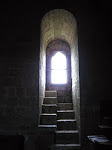
On my pilgrimage through France finding the footsteps of Mary Magdalene in the Languedoc and Provence, I visited a church in a mountain town between Aix-en-Provence and Marseille. This cathedral was dedicated to the Holy Balm, and I wondered what significance this herbal product could have. In their crypt they had a head on display. They claimed it was the skull of Mary Magdalene.
I was full of questions as I descended the stairs. Did someone desecrate her grave? Did they dig her up at some point and give a bone to various different churches that qualified? I actually didn't run across any other relic of her body in my travels. So why was this head saved, prepared and put on display? It was a skull with some skin still on it and some hair on one side. Was it prepared as an oracle by an expert priestess from Ephesus?
The book is coming out by the end of March. See what I found out over eight years of research and pilgrimage, both in interesting landscapes and in my own inner worlds. "Rituals in Sacred Stone" became a controversial interpretation of one of the most mysterious and compelling women in history; wife, priestess and queen, Mary Magdalene.
It's been a some time since I wrote an entry. I've been busy with the publishing process of the book. (And Christmas and my birthday.)
It is now ready for the first printing, and I'm feeling like a squirrel running up and down trees. I'm of course excited about this development, but I'm also scared to death. The research and the writing of this work has all been a very private process. Now it's all becoming public. I'm birthing a baby. I'm on the outward journey after an inward one, where I've retreated to my little room and dived into my story, walking with my characters and feeling their emotions through this dramatic story. It's been a heartwrenching experience. Mary Magdalene's life was filled with danger and heavy decisions. She was burdened with her heritage and her knowlegde. They led her to make crucial choices at difficult crossing points leading her to secretly carry a lot of information she would rather not be privelieged to have.
I've always felt that the story of the head of John the Baptist was missing some crucial elements. Young Salome wouldn't have the desire for a man's execution. There is more to the story. In one version, she consults her mother, before she presents her wish. I looked up her mother, and found that her name was Herodias, the widow of Herod Philip, who upon her husbands death was forced to marry his brother, Herod Antipas. Now the plot thickens. I also found that John the Baptist had protested against the behavior of Antipas, who had divorced his previous wife to marry Herodias, and was trying to get into the council at the Temple of Jerusalem. According to the Jews, divorce was not allowed, and only Rabbis could be on the council. What was Antipas trying to do, being a Roman with no Jewish connections? Now we have a political hornets nest which the good Baptizer put his religious nose right into.
As I researched Herodias, I found that she was educated at Ephesus, famous for it's oracle, and that she had a following of admirers. Now we have a much more interesting set up for the story.
The more I looked into the mystery schools in function at their time, I found that they all respected each other and students traveled between the different temples to learn the different traditions. The druids had their universities, the Egyptian temples had their temple schools, and the exchange of information was welcomed.
There was a different focus for the religious centers. They weren't focused on worshiping the Gods. They were working with the Gods, in the focus of the temple in questions. They were all presenting different paths to relate to the unseen forces functioning between us, whether you used them for healing, to communicate with God or to take the journey of Osiris. All the different ways were valid and seen as different paths to God.
And today we are fighting over which way to worship God, to the point of disagreeing on which hymn to sing.
It is very likely that Mary Magdalene was a highly educated priestess of rank in several temples. There were things happening around Christ which shows that they worked across many traditions and used elements from the Egyptian Journey of Osiris, the healing thechnique from the Therapautae group, the wisdom of the Nazareeans and the Essenes, and older wisdom of the Torah.
I found that the temple of Serabit on top of Sinai knew how to make monoatomic gold and how to work with it. It could be ingested to produce enlightenment from within, or it could be used as an advanced architectural technology to build pyramids.
I was now introduced a world very different than our own, and very very different than the passive church going of our time which passes as relationships to God. To these people, God was a concept that lived inside you. It was a force you learned to work with. The world behind the veils was somewhere you could learn to visit and come back from.
Did Herodias know how to create an oracle? Was the head of John the Baptist presented at the birthday party of Antipas not the product of a brutal and gory exectution, but a product of a planned operation creating an oracular head which could be woken up by an educated priestess from Ephesus? And why did Herodias want it? Or did she want it back? What happened to it afterwards? And why do we have two places, one in Spain and one in Turkey, that claim to have the head of John the Baptist on display?
On my pilgrimage through France finding the footsteps of Mary Magdalene in the Languedoc and Provence, I visited a church in a mountain town between Aix-en-Provence and Marseille. This cathedral was dedicated to the Holy Balm, and I wondered what significance this herbal product could have. In their crypt they had a head on display. They claimed it was the skull of Mary Magdalene.
I was full of questions as I descended the stairs. Did someone desecrate her grave? Did they dig her up at some point and give a bone to various different churches that qualified? I actually didn't run across any other relic of her body in my travels. So why was this head saved, prepared and put on display? It was a skull with some skin still on it and some hair on one side. Was it prepared as an oracle by an expert priestess from Ephesus?
The book is coming out by the end of March. See what I found out over eight years of research and pilgrimage, both in interesting landscapes and in my own inner worlds. "Rituals in Sacred Stone" became a controversial interpretation of one of the most mysterious and compelling women in history; wife, priestess and queen, Mary Magdalene.
Sunday, October 5, 2008
My book.
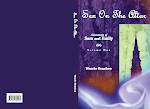
"Sex on the Altar" is now available on Amazon.com. Click on the image of the book to the left to see the listing.
"Iconographic and sublime, "Sex on the Altar" by Wencke Braathen is first in the Adventures of Sam and Emily series that levels the playing field in the battle of the sexes—and sex. Wise, wicked, and witty, this debut fantasy fiction is rich in style, prose, lyrics and plot. It encourages constructive discipline and human affirmation—all we do matters. All we do is what we are, as a matter of prophecy and intention.
God has a problem. Mankind does not seem to get it and it is their fault the Queen of Heaven has been sucked into the Earth. There just hasn’t been enough devotion —not enough love. A heartsick God is willing to pull out all the stops and enlists Isis, the Egyptian goddess, a willing plotter, to bring the Queen back. In turn, Isis chooses Emily, a middle-aged woman, to work through, and becomes a smaller version of herself sitting on Emily’s shoulder. As things go haywire, Emily develops a relationship with Sam, and with a gift from the gods, they become expert lovers, which is enough fuel to wake the Queen of Heaven from her slumber in the center of the earth. Isis later calls upon Virgin Mary and Mary Magdalene to start a dandelion campaign to reinstate balance of creation. When Emily suggests Christ and Mary Magdalene jump down from a crucifix and a sculpture, the Christian icons are free to roam like teenagers in love. As they unite in Emily’s body, the Queen of Heaven is able to connect with God who reaches down and pulls her up from the underworld. Immensely serene and shocking, this debut is absolutely stunning!"
BookSurge
"Iconographic and sublime, "Sex on the Altar" by Wencke Braathen is first in the Adventures of Sam and Emily series that levels the playing field in the battle of the sexes—and sex. Wise, wicked, and witty, this debut fantasy fiction is rich in style, prose, lyrics and plot. It encourages constructive discipline and human affirmation—all we do matters. All we do is what we are, as a matter of prophecy and intention.
God has a problem. Mankind does not seem to get it and it is their fault the Queen of Heaven has been sucked into the Earth. There just hasn’t been enough devotion —not enough love. A heartsick God is willing to pull out all the stops and enlists Isis, the Egyptian goddess, a willing plotter, to bring the Queen back. In turn, Isis chooses Emily, a middle-aged woman, to work through, and becomes a smaller version of herself sitting on Emily’s shoulder. As things go haywire, Emily develops a relationship with Sam, and with a gift from the gods, they become expert lovers, which is enough fuel to wake the Queen of Heaven from her slumber in the center of the earth. Isis later calls upon Virgin Mary and Mary Magdalene to start a dandelion campaign to reinstate balance of creation. When Emily suggests Christ and Mary Magdalene jump down from a crucifix and a sculpture, the Christian icons are free to roam like teenagers in love. As they unite in Emily’s body, the Queen of Heaven is able to connect with God who reaches down and pulls her up from the underworld. Immensely serene and shocking, this debut is absolutely stunning!"
BookSurge
Subscribe to:
Posts (Atom)
